Fiber lazer pirinç ve bakırı kesebilir mi?
Evet. Modern fiber lazerler 1064 nm dalga boyunun bu metallere diğer yöntemlere göre çok daha iyi bağlanması nedeniyle pirinç ve bakırı düzenli olarak keserler. CO2 Lazerin 10.6 mikronluk ışın demeti ve akım kaynakları geri yansıma korumasıyla birlikte gönderilir. Bakırın her 1 mm'si için yaklaşık 1 kW güç, bakır için yüksek basınçlı oksijen, pirinç için azot ve güvenilir üretim çalışmaları için 2 kW ve üzeri güç planlayın.
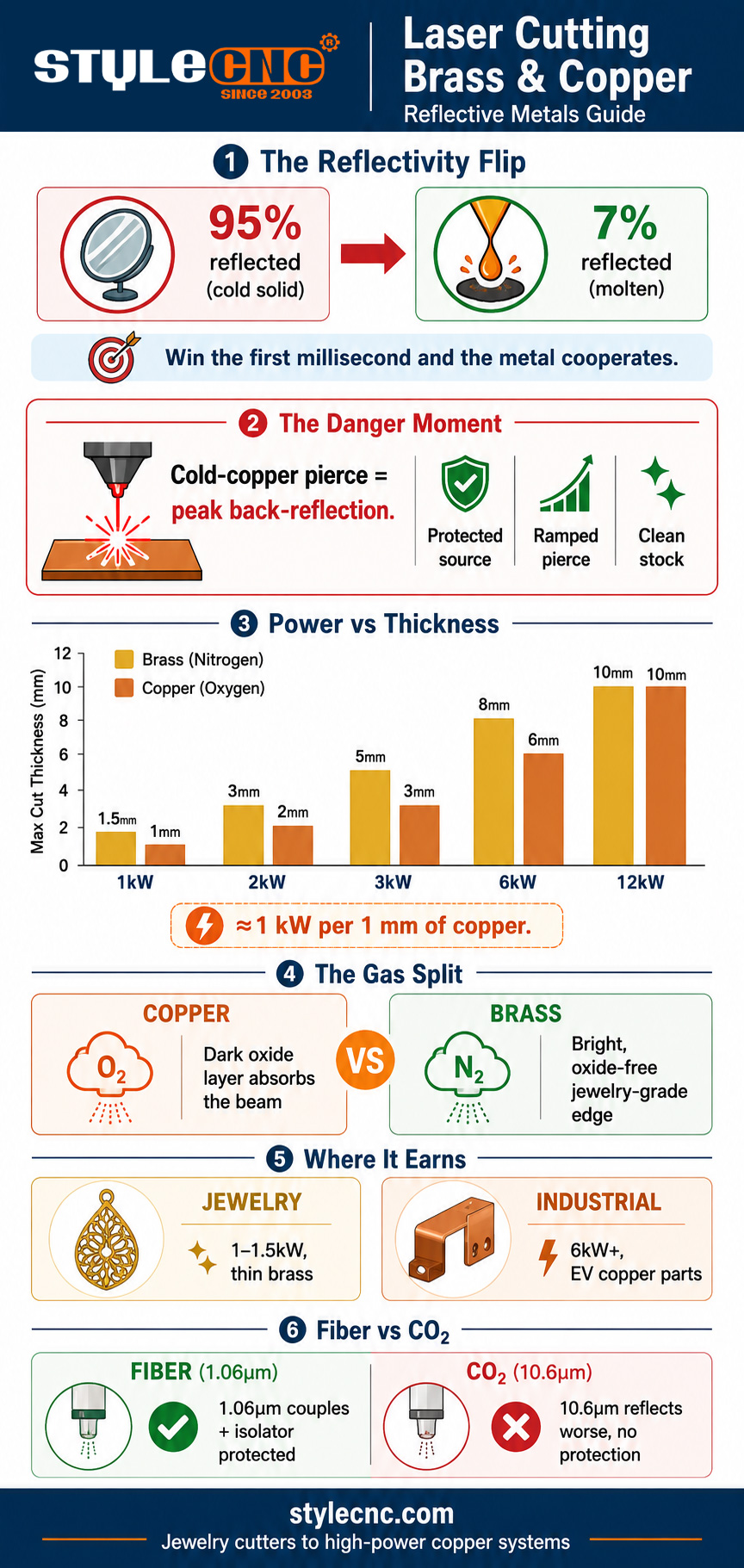
Bunu mümkün kılan fiziksel prensip, sıcaklıkla ilgili bir oyundur. Bakırın yansıtıcılığı soğuk ve katı haldeyken yaklaşık %95'tir, ancak metal eridiğinde yaklaşık %7'ye düşer. Fiber lazer, bu geçişi zorla gerçekleştirerek kazanır: küçük bir noktada maksimum güç yoğunluğu, yüzeyi milisaniyeler içinde eritir ve o andan itibaren metal ışını neredeyse tamamen emer ve kesme işlemi normal şekilde devam eder. Yansıtıcı metallerin tüm zorluğu, erime havuzu oluşmadan önceki ana sıkıştırılır.
Geriye Dönük Düşünme: Gerçek Risk Orada Yatıyor
Erime öncesi o an, delme anıdır ve tüm kesme dizisindeki en yüksek riskli olaydır. Soğuk, ayna gibi parlak bakıra tam güçle sürekli bir delme işlemi, yansıtılan enerjinin maksimum düzeyini saniyenin ilk kesirinde doğrudan ışın yoluna geri gönderir. Daha eski, korumasız kaynaklarda, bu geri dönen ışık, iletim fiberine veya lazer modülünün kendisine zarar verebilir; lazerler ve bakır hakkındaki efsaneler de buradan gelir.
Bu folklorik inanışı ortadan kaldıran 3 şey var. Modern fiber optik kaynaklar, genellikle yansıma izleme kapatma mantığıyla desteklenen, hasardan önce lazeri arızalandıran geri yansıma izolasyonu ve sensörlerle birlikte gelir. Delme rutinleri değişti: kademeli veya darbeli delmeler, soğuk metal üzerinde tam güçte kalmak yerine ayna fazını milisaniyelerle sınırlandırır. Ve yüzey hazırlığı standart hale geldi, çünkü yağ, oksit filmleri ve nemin hepsi yansımayı artırır.
Satın alma işlemi oldukça basittir: Pirinç ve bakır işlerinde, kaynak, kesme başlığı ve koruma sistemlerinin kalınlığınıza uygun yansıtıcı metaller için derecelendirildiğini yazılı olarak teyit edin. Parçalar dışarıdan iyi görünse de, derecelendirilmemiş bir makine sessizce zarar verici geri dönüş ışığını emebilir.
Lifin Neden Daha İyi Olduğu CO2 Yansıtıcı Metaller üzerine
Dalga boyu aralığı, diğer tüm özelliklerden önce belirleyici faktördür. Bakır ve pirinç bunu yansıtır. CO2 Lazerin 10.6 mikronluk ışını, fiber lazerin 1.06 mikronluk ışınından bile daha güçlüdür, bu nedenle CO2 Makine, enerji aktarımında birkaç kat azalma ve daha kötü bir geri yansıma sorunuyla mücadeleye başlıyor; üstelik bunu telafi edecek koruyucu izolatör teknolojisi de yok. CO2 Bu sistemler metal olmayan malzemelerde ve bazı kalın levha uygulamalarında yerlerini koruyor, ancak pirinç ve bakır için sektörün kararı kesinleşti: ya fiber ya da hiçbir şey.
Aynı dalga boyu avantajı, tüm fiber kategorisinin temelini oluşturmaktadır ve bu konu ayrıntılı olarak ele alınmıştır. fiber lazer teknolojisi kılavuzuYansıtıcı metaller için bu, doğrudan daha düşük minimum güç, daha hızlı delme ve daha güvenli bir optik yol anlamına gelir.
Minimum Güç ve Kalınlık Sınırları
Bakır için genel kural, kalınlığın her milimetresi için yaklaşık 1,000 W güçtür; pirinç ise çinko içeriği sayesinde daha iyi emilim sağladığı için bu konuda biraz daha esnektir. Aşağıdaki tablo bunu pratik pencere uygulamalarına dönüştürmektedir.
| Lazer Gücü | Pirinç (Üretim) | Bakır (Üretim) | Tipik Çalışma |
|---|---|---|---|
| 1 kW | 1.5 mm'ye kadar | 1 mm'ye kadar | Takı, etiketler, ince levha |
| 2 kW | Mm'ye 2 3 | Mm'ye 1.5 2 | Tabela, dekoratif paneller |
| 3 kW | Mm'ye 4 5 | 3 mm | Genel imalat |
| 6 kW | Mm'ye 6 8 | Mm'ye 5 6 | Bara hatları, elektrikli parçalar |
| 12 kW+ | 10 mm+ | 8 ila 10 mm+ | Bakır/pirinç levha üretimi |
İki temel alışkanlık, kesimleri güvenli aralıkta tutar. Kaynağın izin verdiği en yüksek tepe gücünde çalıştırın, çünkü güç yoğunluğu yansıtıcı fazı kısaltır; ardından, kesme işlemini sağlayan maksimum hızdan %10 ila %15 daha düşük bir besleme hızı uygulayarak işlem marjı kazanın. Ayrıca, hem delme hem de kesme için odağı malzeme yüzeyinde veya çok yakınında tutun; yansıtıcı metaller, çeliklere göre odak kaybını daha hızlı cezalandırır.
Pirinci Bakırdan Ayıran Gaz Stratejisi
İşte sezgisel olmayan kısım: İki metal farklı gazlar istiyor ve bakırın cevabı, alışılagelmiş, net ve kesin kuralı bozuyor.
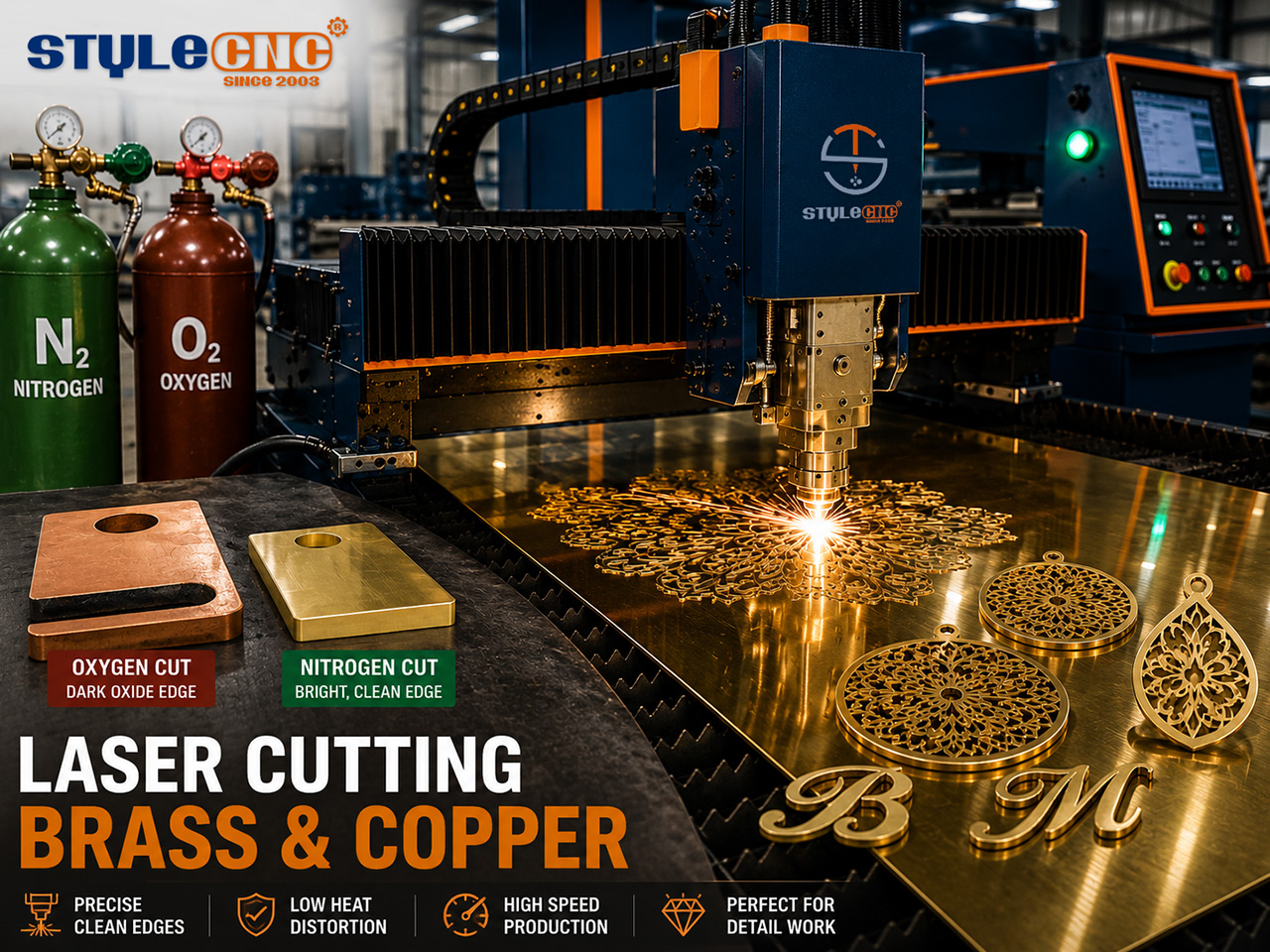
✓ Bakır: yüksek basınçlı oksijen. Oksijen, bakır yüzeyiyle reaksiyona girerek koyu bir oksit tabakası oluşturur ve bu koyuluk asıl amaçtır: bakır oksit, parlak bakırın yansıttığından çok daha iyi bir şekilde ışını emer. Yaklaşık 2 mm'den itibaren, sadece azotla bakır kesimi durur ve güvenilir bir delme ve kesim için oksijen zorunlu hale gelir.
✓ Pirinç: azot. Pirinç, çinko içeriği sayesinde geleneksel bir metale daha yakın davranır; bu nedenle azot her zaman sunduğu sonucu verir: dekoratif ve mücevher işlerinde doğrudan kullanıma uygun, oksitsiz, parlak ve temiz bir kenar. Alaşım bileşimi davranışı değiştirir, bu nedenle her yeni pirinç kalitesini parametre testinden geçirin.
✓ Her ikisi de: önce malzemeyi temizleyin. Yağ, oksidasyon tabakaları, kaplamalar ve nem, yüzey yansımasını artırır. Kesimden önce malzemeyi silmek, mevcut en ucuz yansıma koruma yöntemidir.
Pirinç ve Bakır Kesiminin Para Kazandırdığı Yer
Takı ve küçük dekoratif işler doğal bir başlangıç noktasıdır: 1.5 mm'den ince pirinç levhalar, kompakt 1 ila 1.5 kW'lık makinelerde temiz bir şekilde kesilir ve lazer metal takı kesici Bu ürün, kolye uçları, küpe boşlukları ve telkari parçalarının gerektirdiği ince detay hassasiyetiyle, tam olarak bu tür işler için yapılandırılmıştır. Tabela uygulamaları ikinci doğal uyum alanıdır: pirinç harfler, logo plakaları ve mimari süslemeler, cilalama veya patina öncesinde yeniden işleme gerektirmeyen parlak nitrojen kesimli kenar üzerinde kullanılabilir.
Endüstriyel alanda, bakır baralar, transformatör parçaları ve elektrik konektörleri seri üretim lazer işleridir ve elektrikli araç batarya üretimi talebi katlamıştır. Bu, 6 kW ve üzeri güç gerektiren bir alandır ve burada... yüksek güçlü fiber lazer metal kesme makinesi Bu sınıf, bakır üretiminin gerektirdiği güç yoğunluğunu ve gaz dağıtımını karşılıyor. Orta menzildeki performansı kanıtlamak için, STYLECNC's 2000 W fiber lazerle bakır kesme gösterimi Bu video, gerçek malzeme üzerinde çalışan süreci gösteriyor.
Sıkça Sorulan Sorular
Bakır kesmek fiber lazerime zarar verir mi?
Modern, düzgün yapılandırılmış bir makinede değil. Risk penceresi, yansıtıcılığın %95'e yakın olduğu ve geri dönen ışığın en yüksek seviyeye ulaştığı soğuk bakıra delme işlemidir. Mevcut kaynaklar, geri yansıma izolasyonu ve arızayı güvenli bir şekilde izleme özelliğiyle birlikte gelir ve kademeli delme, ayna fazını milisaniyelere kadar düşürür. Dikkat edilmesi gereken nokta: Kaynağınızın ve başlığınızın, kalınlığınız kadar bakır için derecelendirildiğine dair yazılı onay alın.
Bakır için neden oksijen, pirinç için ise azot kullanılır?
Bakırın problemi yansımadır ve oksijen bunu kimyasal olarak çözer: oluşturduğu oksit tabakası koyu renklidir ve ışını parlak bakırdan çok daha iyi emer. Yaklaşık 1 mm'nin altında azot yeterli olabilir; yaklaşık 2 mm'den itibaren oksijen gerekli hale gelir. Pirinç, çinko içeriği sayesinde yeterince iyi emilim sağladığı için azotun olağan avantajı devreye girer: parlak, oksitsiz ve cilalamaya hazır bir kenar elde edilir ki bu da dekoratif ve mücevher işlerinde tam olarak ihtiyaç duyulan şeydir.
Pirinç levhayı kesmek için ne kadar güce ihtiyacım var?
Takı ve yaklaşık 1.5 mm'ye kadar ince dekoratif pirinç için 1 kW yeterlidir ve temiz kesim sağlar. 2 ila 3 mm kalınlığındaki tabela tipi pirinç için 2 kW gerekir. 4 ila 5 mm kalınlığındaki genel imalat için 3 kW, kalın pirinç levhalar için ise 6 kW ve üzeri güç gereklidir. Pirinç, fiber dalga boyunu daha iyi emdiği için her güç seviyesinde bakırdan biraz daha kalındır.
Olabilir CO2 Lazer kesim pirinç mi yoksa bakır mı?
Esasen hayır ve yansıtıcı metal koruması olmayan makinelerde denenmemelidir. Her iki metal de 10.6 mikronluk ışınımı yansıtır. CO2 Fiber dalga boyundan bile daha güçlü bir şekilde dalga boyuna bağlanır, bu nedenle bağlantı daha kötüdür ve optik yolda izolatör teknolojisi olmadığı için geri yansıma riski daha yüksektir. Bu, metal kesiminde fiber lazerin sadece daha iyi değil, kesinlikle doğru araç olduğu en açık örneklerden biridir.
Pirinç kesimlerim neden farklı malzeme partilerinde değişiklik gösteriyor?
Pirinç, tek bir malzeme değil, bakır-çinko alaşımlarının bir ailesidir ve emilime yardımcı olan çinko oranı kaliteye göre değişir. Daha yüksek çinko oranına sahip alaşımlar daha kolay kesilir; kurşunlu, serbest işlenebilir kaliteler ise farklı davranır. Yüzey durumu ikinci bir değişken ekler, çünkü oksidasyon ve filmler yansımayı değiştirir. Çözüm, alüminyum alaşımlarında olduğu gibi aynıdır: parametreleri kaliteye göre koruyun ve yeni bir parti geldiğinde kısa bir test kesimi yapın.
Alt çizgi
Elyaf kaynaklarına yansıma koruması eklendiği ve operatörler delme işlemine saygı duymayı öğrendiği günden beri pirinç ve bakır yasaklı metaller olmaktan çıktı. Tarif tutarlı: yansıtıcı fazdan geçmek için maksimum güç yoğunluğu, yüzeye yakın odaklama, bakır için oksijen ve pirinç için azot, temiz malzeme ve boyutlandırma kuralı olarak milimetre başına yaklaşık bir kilovat.
STYLECNC Bu aralıktaki tüm fiber lazerleri yapılandırır, mücevher sınıfı metal kesici ince pirinç işleri için yüksek güç sistemleri Bakır üretimi için. Gönderin STYLECNC Yansıtıcı metal sınıfına uygun bir konfigürasyon ve gaz önerisi için metallerinizi, kalınlıklarınızı ve hacimlerinizi bir araya getirin.